
How AI fits into the shop
Tattooing has always been a slow conversation between a client's messy idea and an artist's pen. That hasn't changed, but the tools have. By 2026, AI has moved from a gimmick to a standard part of the sketching phase, helping artists get through the 'blank page' stage faster.
The demand for truly custom tattoo designs is higher than ever. People aren’t satisfied with flash sheets anymore; they want something unique and meaningful. This puts pressure on tattoo artists, who are already incredibly skilled craftspeople, to constantly generate original concepts. It’s a demanding job, and AI is emerging as a tool to help manage that workload and explore creative avenues.
Early AI applications focused on simpler tasks like stencil generation, but now we’re seeing tools capable of producing full-fledged design concepts. This isn’t about replacing tattoo artists – quite the opposite, in fact. It’s about augmenting their abilities, providing a starting point for collaboration, and ultimately delivering more personalized and satisfying results for clients. The technology isn’t perfect, but it’s evolving quickly.
The tools artists actually use
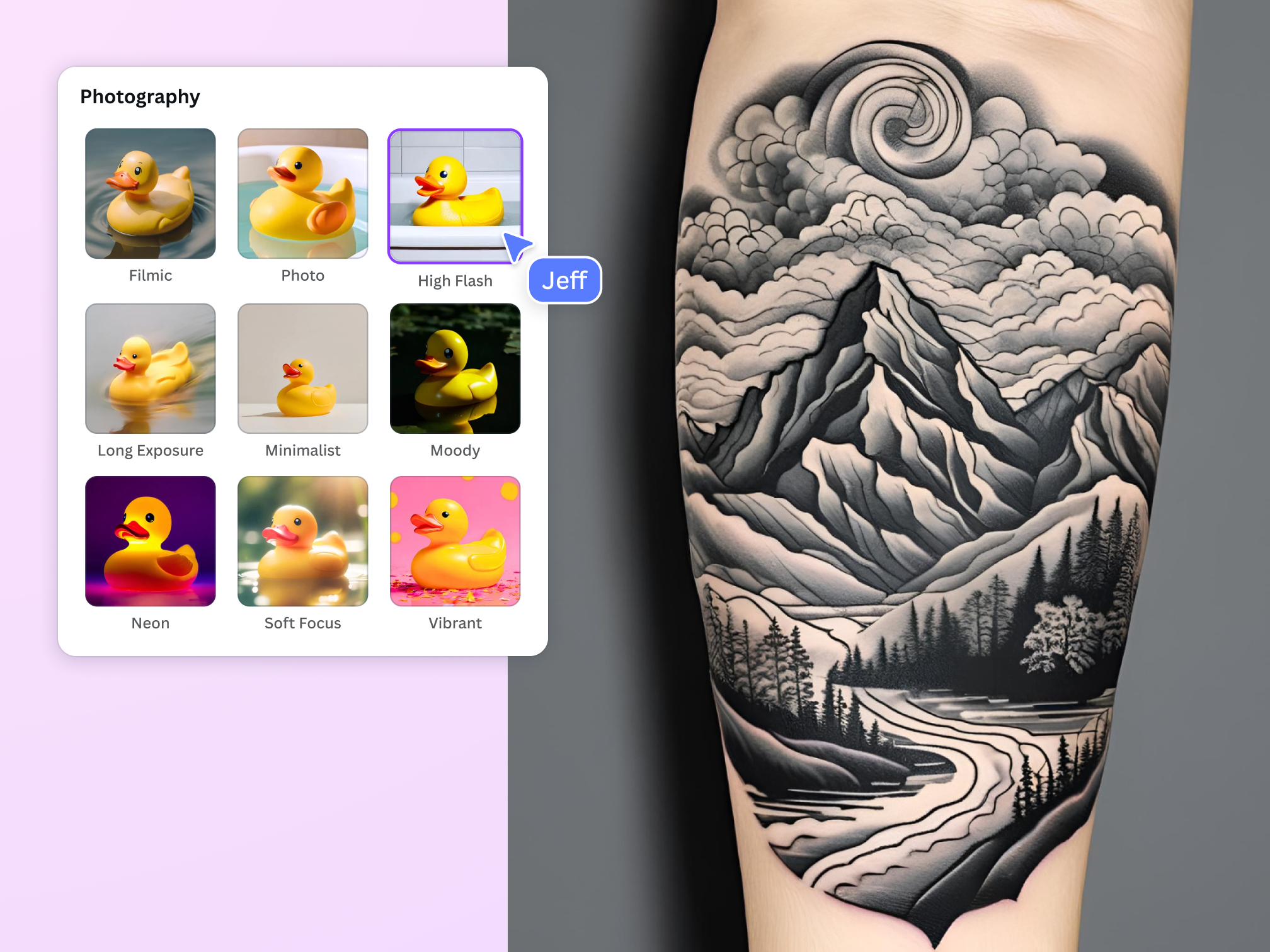
Several platforms are leading the charge in AI-powered tattoo design. Adobe Firefly and Canva’s AI tattoo generator are two prominent examples. These tools primarily rely on text-to-image generation, meaning you describe what you want in words, and the AI creates a visual representation. They also offer style transfer, allowing you to apply the aesthetic of a particular artist or art movement to your design.
The way these tools work is fascinating. They’ve been trained on massive datasets of images, learning to associate words with visual elements. When you enter a prompt like “a watercolor hummingbird with roses,” the AI draws on that knowledge to assemble an image that matches your description. Canva, for example, specifically highlights its ability to create tattoo designs, while Adobe Firefly is a more general-purpose generative AI that can be adapted for this purpose.
These tools aren't magic. They are great at clean line work and basic geometry, but they usually fail at complex anatomy or hyper-realistic shading. You'll spend more time 'prompting'—fiddling with keywords—than you might expect. It is often a game of trial and error to get something that doesn't look like a digital mess.
I’ve seen examples where a vague prompt yields a generic, uninspired design, while a detailed, well-crafted prompt produces something surprisingly compelling. It’s a skill in itself. The output is rarely exactly what you envisioned, but it can be a fantastic springboard for further development, offering ideas you might not have considered on your own.
From Sketch to Skin: Refining AI Designs
The biggest misconception about AI in tattooing is that it will replace artists. That’s simply not the case. What’s happening is that artists are integrating AI into their workflow as another tool, similar to how they adopted digital design software years ago. The AI generates a base concept, and the artist then takes over, refining and perfecting it for the real world.
The iterative process is key. An artist will take the AI-generated image and use their skills to correct anatomical inaccuracies, adjust shading and line weight, and ensure the overall composition is balanced and aesthetically pleasing. They’ll also consider the practicalities of tattooing – how the design will flow with the body’s contours, how it will age over time, and what will make it a safe and lasting piece of art.
Digital editing software like Photoshop and Procreate are essential for this stage. Artists use these tools to make precise adjustments, add details, and ensure the design is technically sound. They might completely redraw certain elements, or use the AI output as a starting point for a more elaborate custom design. It's a blend of artificial intelligence and human artistry.
I've talked to several artists who emphasize that the AI component saves them time on initial concepting, allowing them to focus on the more creative and technically challenging aspects of the work. It’s about efficiency and exploration, not replacement.
Personalized Consultations: AI as a Visualizer
AI is also revolutionizing the client consultation process. Traditionally, this involved a lot of back-and-forth discussion, sketches, and sometimes miscommunication. Now, AI-powered tools are emerging that allow clients to "try on" tattoos virtually using augmented reality (AR). This helps them visualize the design on their own body before committing to the ink.
Beyond simple AR previews, some tools can generate variations of a design in real-time based on client feedback. If a client wants a slightly different angle, a different color scheme, or a different level of detail, the AI can quickly produce alternative options. This dramatically enhances communication and manages expectations.
The potential for AI to create personalized design boards based on a client’s style preferences is also exciting. Imagine uploading images of your favorite art, fashion, and design elements, and the AI generating a curated collection of tattoo concepts inspired by your aesthetic. This is where we’re heading, and it promises to make the design process even more collaborative and satisfying.
Copyright and the ownership mess
The rise of AI-generated art has understandably raised concerns about copyright and originality. If an AI creates a design, who owns the rights to it? The answer is complex and currently being debated in legal circles. The legal landscape is still catching up to the technology.
Most tattoo artists are addressing this by significantly modifying the AI outputs. They’re not simply copying and pasting an AI-generated image onto skin; they’re using it as a starting point and then adding their own unique artistic flair. This establishes originality and ensures the design is a truly custom creation.
The ethical considerations are also important. What does "authorship" mean when AI is involved? Is it fair to claim full credit for a design that was partially generated by an algorithm? These are questions the tattoo community is grappling with. Transparency is key – artists should be upfront with clients about the role AI played in the design process.

No comments yet. Be the first to share your thoughts!