


Define your tattoo style first
Find a Local Tattoo Artist You Can Trust works best as a clear sequence: define the constraint, compare the realistic options, test the tradeoff, and choose the path with the fewest hidden costs. That order keeps the advice usable instead of decorative. After each step, pause long enough to check whether the recommendation still fits the reader's actual situation. If it depends on perfect timing, unusual access, or a best-case budget, include a simpler fallback.
The simplest way to use this section is to write down the real constraint first, compare each option against it, and choose the path that still works outside ideal conditions.
Search local tattoo studios online
Finding a trustworthy artist starts with a targeted search. Generic directory listings often prioritize paid ads over quality, so skip the broad "best tattoo shops" results. Instead, search for "tattoo studio" alongside your city or neighborhood name. This filters out national chains and brings up independent shops with established local reputations.
Once you have a list of names, visit their official websites. A professional studio will have a clean, easy-to-navigate site that clearly lists their artists, services, and booking policies. Look for evidence of hygiene standards and professional liability insurance, which are hallmarks of a legitimate business. Avoid studios that lack a web presence or rely solely on unverified third-party aggregators.
The most critical part of this search is reviewing artist portfolios. Reputable studios showcase their artists' work directly on their sites or verified social media profiles. Look for a consistent style, clean line work, and good shading. If a studio lists an artist but provides no visual proof of their skill, move on. You need to see their actual ink, not just their business card.
Use specific search terms like "tattoo studio [City Name]" to find independent shops rather than national chains or ad-heavy directories. This helps you identify local businesses with community roots.
Go directly to the studio's website. Check for clear artist bios, hygiene protocols, and professional contact information. A well-maintained site suggests a business that takes its operations seriously.
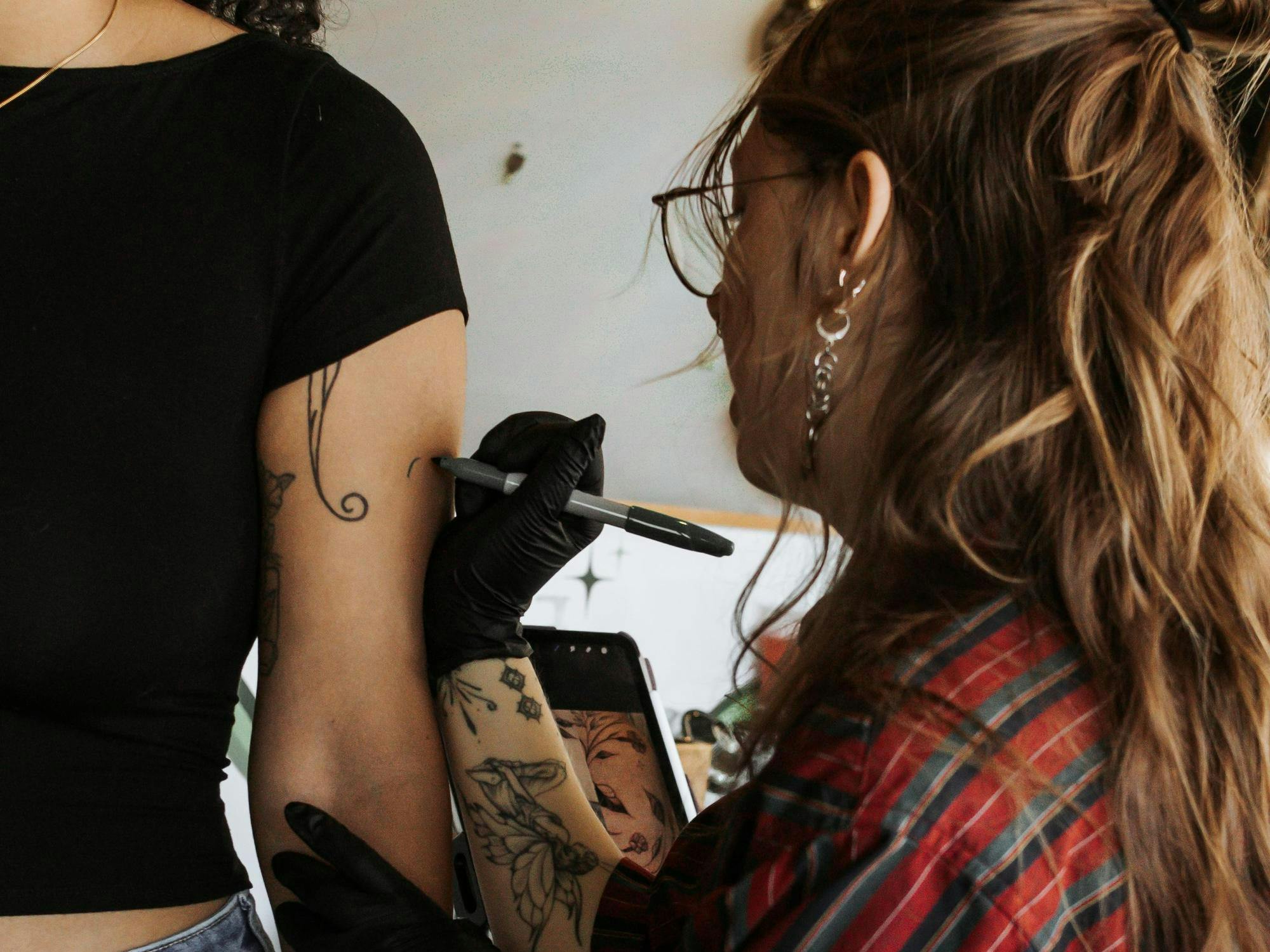
Review the visual work of specific artists. Look for consistent style, clean lines, and healed tattoo examples. Avoid studios that do not display their artists' portfolios prominently.
Evaluate artist portfolios and reviews
Finding a local tattoo artist you can trust requires looking past the polished Instagram feed. You need to verify that the artist’s healed work matches their portfolio and that their reputation is consistent across platforms.
Check for healed work
A tattoo looks different immediately after the session than it does six months later. Swelling, scabbing, and excess ink can mask poor technique. When reviewing an artist’s portfolio, look specifically for photos taken at least four weeks post-session. These images reveal how well the ink settled and whether the lines remained sharp or blurred. If an artist only posts fresh tattoos, ask to see healed examples or check their older posts for before-and-after sequences.
Read reviews for patterns, not just volume
A high star rating with few reviews is less reliable than a steady 4.5-star average with dozens of comments. Look for recurring themes in the feedback. Consistent praise for hygiene, professionalism, and pain management is a strong signal. Conversely, watch for repeated complaints about touch-ups, ghosting, or poor communication. Platforms like Yelp or Google Reviews often contain more detailed narratives than social media comments. You can compare artists side-by-side to see who stands out in these areas.
| Style Match | Portfolio Quality | Review Sentiment | Healed Work |
|---|---|---|---|
| Niche-specific | High-resolution | Detailed narratives | 4+ weeks old |
| Generalist | Curated only | Generic praise | Fresh only |
Verify consistency across sources
Cross-reference what you see on social media with independent review sites. An artist might curate their Instagram to show only their best work, but Yelp or Google reviews often reflect the full client experience, including consultations and aftercare support. If a local studio has a strong presence on multiple platforms with consistent feedback, it is a reliable indicator of quality. Always check the dates of the reviews to ensure the artist’s current standards align with recent client experiences.
Verify hygiene and safety standards
Before booking, confirm the studio follows strict health codes. A clean environment is your first line of defense against infection. Look for visible evidence of sterilization and single-use protocols during your consultation or walk-in.
Check for an autoclave on-site. This machine uses high-pressure steam to sterilize reusable tools like grips and tubes. If the artist doesn’t have one, ask where they send their equipment. Reputable studios always sterilize between clients. Never let an artist reuse needles, tubes, or ink caps. These should be sealed in sterile packaging and opened in front of you.
Observe the workspace. The station should be covered with fresh, disposable barriers. Ink caps must be single-use. The artist should wear new gloves and change them if they touch anything non-sterile, like their phone or hair. Ask if they use barrier film on all surfaces, including the chair and lamp handles.
Ask about their bloodborne pathogen training. Most states require artists to hold a certification in handling bloodborne pathogens. This isn’t just paperwork; it ensures they know how to handle spills and maintain a sanitary field. You can also check your local health department’s website for recent inspection reports. A studio with recent violations should be avoided.
Book a consultation or walk-in
Find a Local Tattoo Artist You Can Trust works best as a clear sequence: define the constraint, compare the realistic options, test the tradeoff, and choose the path with the fewest hidden costs. That order keeps the advice usable instead of decorative. After each step, pause long enough to check whether the recommendation still fits the reader's actual situation. If it depends on perfect timing, unusual access, or a best-case budget, include a simpler fallback.
Common tattoo booking mistakes
Even with a great artist in mind, small administrative oversights can derail your tattoo booking. Treat the booking process like a contract: read the fine print before you commit. Here are the most frequent pitfalls and how to sidestep them.
Ignoring deposit policies
A deposit is not a tip; it is a non-refundable reservation fee that secures your slot. Many artists require this payment via Venmo or Square before confirming a date. If you try to pay cash on the day of the appointment, you may be turned away. Always ask about the deposit amount and refund policy before you book.
Skipping the consultation
Sending a Pinterest board via email is not a consultation. A proper consultation—whether in person or via video call—allows the artist to assess your skin, discuss placement, and determine if the design is feasible. Skipping this step often leads to miscommunication about size, detail, or pricing. Use this time to ask questions about aftercare and healing expectations.
Booking the wrong artist
Not every artist specializes in every style. A master of fine-line realism may not be the best choice for bold American traditional work. Check the artist’s recent portfolio to ensure their current style matches your vision. Don’t assume that because an artist is popular, they are the right fit for your specific design.
Poor communication
Ghosting your artist or changing your mind at the last minute damages your reputation in the local tattoo community. If you need to reschedule, give as much notice as possible. Clear, respectful communication ensures you remain on the artist’s good side for future work.
No comments yet. Be the first to share your thoughts!