

Ink's Environmental Footprint
The tattoo industry, while celebrated for its artistry, hasn't traditionally been known for its environmental consciousness. A typical session generates surprising waste: single-use plastics from ink caps and barriers, disposable razors, paper towels, and biohazard waste. The ink itself often contains ingredients with questionable environmental impacts.
Traditional tattoo inks often rely on heavy metals like titanium dioxide and mercury sulfide for certain colors. Their production and disposal can contribute to pollution. Chemical runoff from rinsing stations and energy consumption from sterilization equipment also add to the carbon footprint.
Regulations surrounding tattoo practices vary. The Weber Morgan Health Department in Utah, for example, has detailed regulations regarding facility sanitation and safety (Body-Art-Facility-Regulation.pdf, November 2018). However, these regulations primarily focus on health safety, not environmental sustainability, and don't necessarily address the broader ecological impact of the industry.
For a long time, the focus was on providing a safe and artistic service. Awareness is growing, and artists and clients are demanding more environmentally responsible practices. Change is happening, and we're seeing a shift towards a more sustainable approach to tattooing.

The Rise of Vegan & Organic Inks
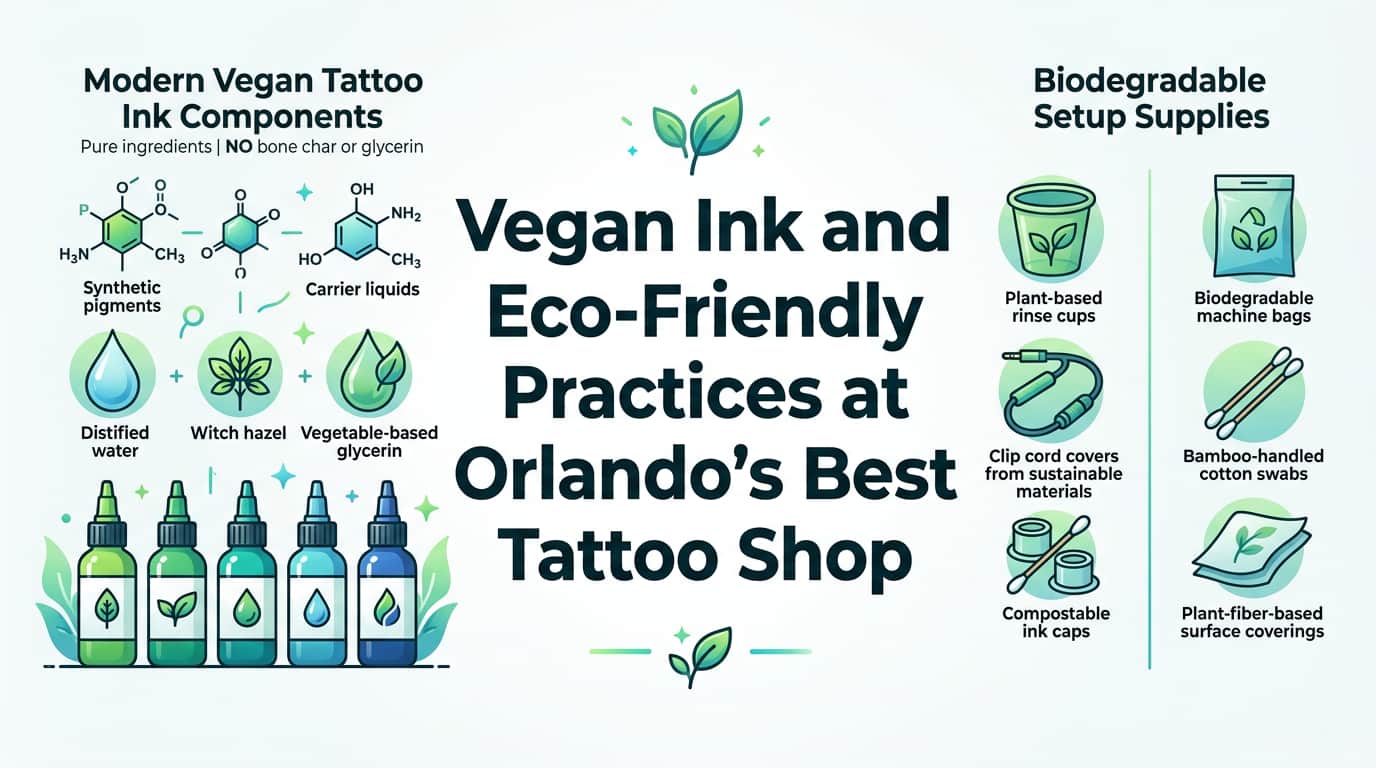
One of the biggest areas of innovation is ink formulation. 'Vegan ink' signifies that the ink is free from animal-derived ingredients. Traditionally, some inks contained ingredients like gelatin, glycerin (sometimes sourced from animals), or bone char used in carbon black production.
'Organic' is a trickier term, not as clearly defined or regulated in the tattoo industry as in food production. Some companies claim "organic" ingredients, but verifying these claims can be difficult. Generally, it suggests ingredients sourced from plants grown without synthetic pesticides or fertilizers, but processing methods can still be a factor. Look for transparency and third-party certifications.
Traditional tattoo inks often use carbon black for black tones and various metal salts for colors. These metals – mercury, lead, cadmium, and others – can pose environmental risks during manufacturing and disposal. Newer vegan inks often use plant-based pigments or synthetic alternatives, like carbon black derived from vegetable sources such as charred coconut shells.
Several brands are leading in sustainable ink development. Eternal Ink offers a vegan line, Dynamic Color has vegan-friendly options, and Intenze Ink is notable for its commitment to high-quality, vegan inks. However, research individual ingredients and manufacturing processes, as "vegan’ doesn’t automatically equate to ‘environmentally friendly".
Beyond Ink: Studio Sustainability
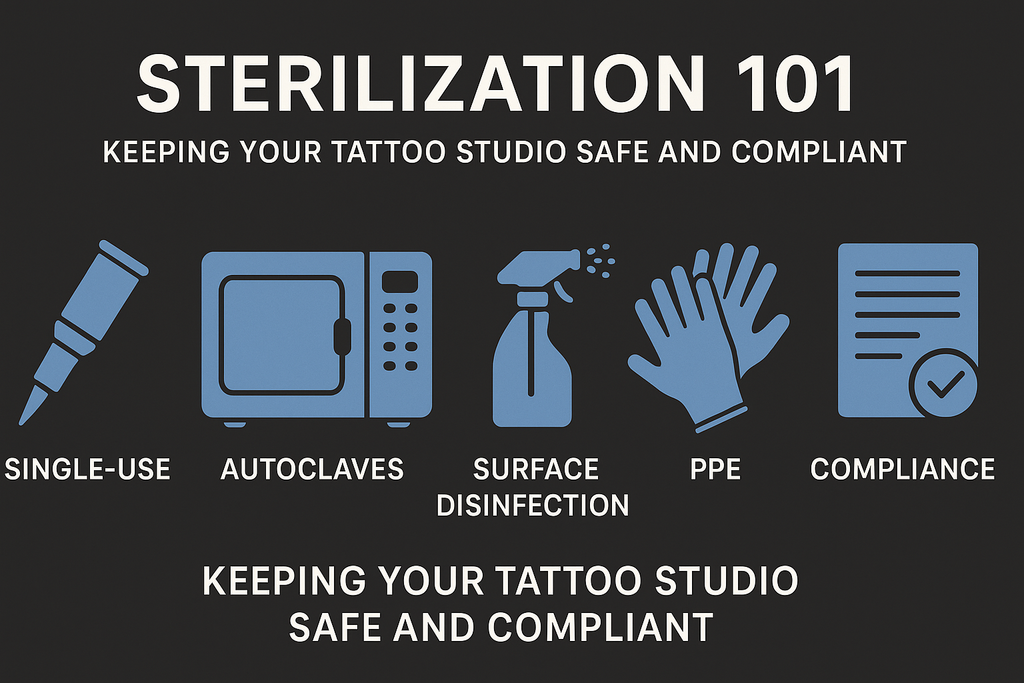
Sustainability in a tattoo studio extends beyond the ink. It involves looking at the entire operation and identifying areas for improvement. Reusable sterilization equipment is a significant step; autoclaves, while initially expensive, eliminate the need for disposable sterilization pouches, drastically reducing plastic waste.
Biodegradable cleaning supplies are another impactful change. Switching from harsh chemical disinfectants to plant-based alternatives minimizes the release of harmful substances. Energy-efficient lighting like LEDs reduces electricity consumption, and water conservation measures, like low-flow faucets and efficient rinsing techniques, can lower water usage.
Some studios go above and beyond, implementing recycling programs for paper, plastic, and ink packaging. Others offset their carbon footprint through donations to environmental organizations or by investing in renewable energy projects. Every effort counts.
The T.R.I.B.E. Zoo in Cheyenne, Wyoming, emphasizes 'Respect' and 'Balance' as core values, hinting at a broader commitment to ethical and potentially sustainable practices, though specific details are not publicly detailed on their website.
- Reusable sterilization equipment (autoclaves)
- Biodegradable cleaning supplies
- Energy-efficient lighting (LEDs)
- Water conservation measures (low-flow faucets)
- Recycling programs
- Carbon offsetting initiatives
Cheyenne's Green Scene
Cheyenne, Wyoming, has a growing number of tattoo shops, according to Yelp’s 2026 listings. While explicit mentions of "eco-friendly" practices are rare in reviews, commitment can be inferred from client feedback and studio descriptions. The T.R.I.B.E. Zoo promotes values aligning with sustainability, and customers mention the studio's cleanliness and professionalism, which often correlates with responsible waste management.
Cheyenne Tattoo Company receives consistently positive reviews highlighting its artistic skill and customer service. While not directly advertising eco-friendly practices, their long-standing presence and positive reputation suggest a commitment to responsible business operations. Specific details about their ink choices or waste disposal methods are not available, but the overall impression is positive.
Lucky Charm Tattoo also receives favorable reviews. Customers praise the artists' attention to detail and the studio's welcoming atmosphere. There’s no explicit mention of sustainability initiatives, but the focus on cleanliness and quality suggests a level of care that could extend to environmental considerations.
Yelp reviews don’t typically focus on sustainability. Customers are primarily concerned with artwork quality, artist skill, and overall experience. This highlights an opportunity for studios to differentiate themselves by actively promoting eco-friendly practices and appealing to environmentally conscious clients.
Disposal Dilemmas & Safer Alternatives
Tattooing generates considerable regulated medical waste – needles, ink caps, gloves, and contaminated materials. Proper disposal is crucial to prevent infection spread, but it also presents an environmental challenge. Traditional disposal methods like incineration or landfilling have negative consequences.
Incineration releases harmful pollutants, while landfilling can lead to soil and water contamination. The Utah regulation referenced earlier likely outlines specific requirements for medical waste disposal, but it’s unclear how strictly these are enforced or if they adequately address environmental concerns.
Fortunately, alternatives exist. Recycling programs for materials like metal needles are becoming more common. Partnering with medical waste disposal companies specializing in eco-friendly practices can also minimize environmental impact. These companies often use advanced sterilization and treatment technologies that reduce waste volume and minimize pollution.
Proper waste segregation is essential. Separating sharps from other contaminated materials, and ensuring all waste is properly contained and labeled, can streamline disposal and reduce environmental contamination risk. Studios should also prioritize using biodegradable or compostable materials.
Cost vs. Commitment
Sustainable practices often come with a higher price tag. Vegan inks can be more expensive than traditional inks. Reusable sterilization equipment requires a significant upfront investment, and biodegradable cleaning supplies may also be pricier. Are customers willing to pay a premium for eco-friendly tattoos?
It’s a complex question. I haven’t found comprehensive data on this specific topic, so much of the answer is anecdotal. However, there's a growing trend of consumers prioritizing sustainability and supporting businesses that align with their values. Many people are willing to pay a little extra for products and services that are ethically and environmentally responsible.
From the artist’s perspective, the increased costs can be a barrier. Smaller studios may struggle to afford the initial investment in sustainable equipment and supplies. However, promoting a commitment to sustainability can also attract a new customer base and enhance the studio’s reputation. It’s a marketing opportunity as much as it is an ethical obligation.
Ultimately, the future of sustainable tattooing depends on a shift in mindset – both from artists and clients. It’s about recognizing that a small investment in sustainability can have a significant positive impact on the environment and the long-term health of the industry.
Tools for a Greener Studio
Equipping a tattoo studio for sustainability doesn’t have to break the bank. There are options available at various price points. Reusable sterilization pouches, like those from Statim, offer a cost-effective alternative to disposable pouches, saving money and reducing plastic waste. Expect to pay around $50 - $150 for a starter set.
Biodegradable cleaning supplies, such as those from Seventh Generation or Biokleen, are readily available and relatively affordable. A gallon of biodegradable disinfectant typically costs between $20 and $40. Switching to reusable microfiber cloths instead of paper towels can also significantly reduce waste.
Energy-efficient LED lighting is another worthwhile investment. LED bulbs consume significantly less energy than traditional incandescent bulbs and have a much longer lifespan. A set of LED shop lights can range from $30 to $100, depending on the size and brightness.
For vegan ink, brands like Eternal Ink and Dynamic Color offer a range of options. A set of basic vegan tattoo inks typically costs between $100 and $200. Investing in a high-quality water filtration system can also reduce water waste and minimize the release of harmful chemicals into the environment. These systems can range in price from $200 to $1000, depending on the features and capacity.
Essential Eco-Friendly Supplies for Sustainable Tattoo Studios

Self-sealing for secure closure · Latex-free construction · Color-changing indicator for sterilization confirmation
These sterilization pouches ensure a hygienic environment with clear indicators of successful sterilization, crucial for eco-conscious tattoo practices.

All-in-one solution for tattooing and aftercare · Designed for use during the tattooing process · Formulated as a cleansing green soap
CleanSkin wipes offer a convenient and effective way to maintain cleanliness during tattooing and for aftercare, reducing water usage and waste.

Height adjustable with a flexible arm · Stepless dimming for customizable lighting · Includes a USB adapter
This energy-efficient LED desk lamp, made with recycled content, provides adjustable and customizable lighting for tattoo artists while minimizing environmental impact.

Set includes 14 vibrant colors · Each bottle contains 1oz (30ml) of ink · Vegan-friendly pigment formulation
The GTARTISTOO vegan-friendly ink set provides a wide range of colors for artistic expression without compromising ethical or environmental standards.

Pack contains 50 sheets of A4 size stencil paper · 4-layer construction for clear transfers · Suitable for thermal transfer machines or freehand drawing
This tattoo transfer paper allows for precise stencil creation, reducing the need for repeated drawing and minimizing material waste in the tattooing process.
As an Amazon Associate I earn from qualifying purchases. Prices may vary.
The Future of Sustainable Tattooing
The sustainable tattoo revolution is just beginning. We can expect to see continued innovation in ink formulation, with the development of even more sustainable and ethically sourced pigments. Researchers are exploring new plant-based dyes and synthetic alternatives that minimize environmental impact.
Advancements in sterilization technology could also play a role. More efficient and eco-friendly sterilization methods will reduce energy consumption and minimize waste. The potential for industry-wide certification programs is also exciting. A standardized certification system would help consumers identify studios that are genuinely committed to sustainability.
I believe we'll see increased pressure on tattoo supply companies to adopt more sustainable practices. Artists and clients will demand greater transparency and accountability throughout the supply chain. The rise of social media will also play a role, as consumers become more vocal about their environmental concerns.
Ultimately, the future of sustainable tattooing depends on a collective effort. Artists, studios, suppliers, and consumers all have a role to play. By embracing sustainable practices, we can ensure that the art of tattooing remains vibrant and thriving for generations to come.


No comments yet. Be the first to share your thoughts!