
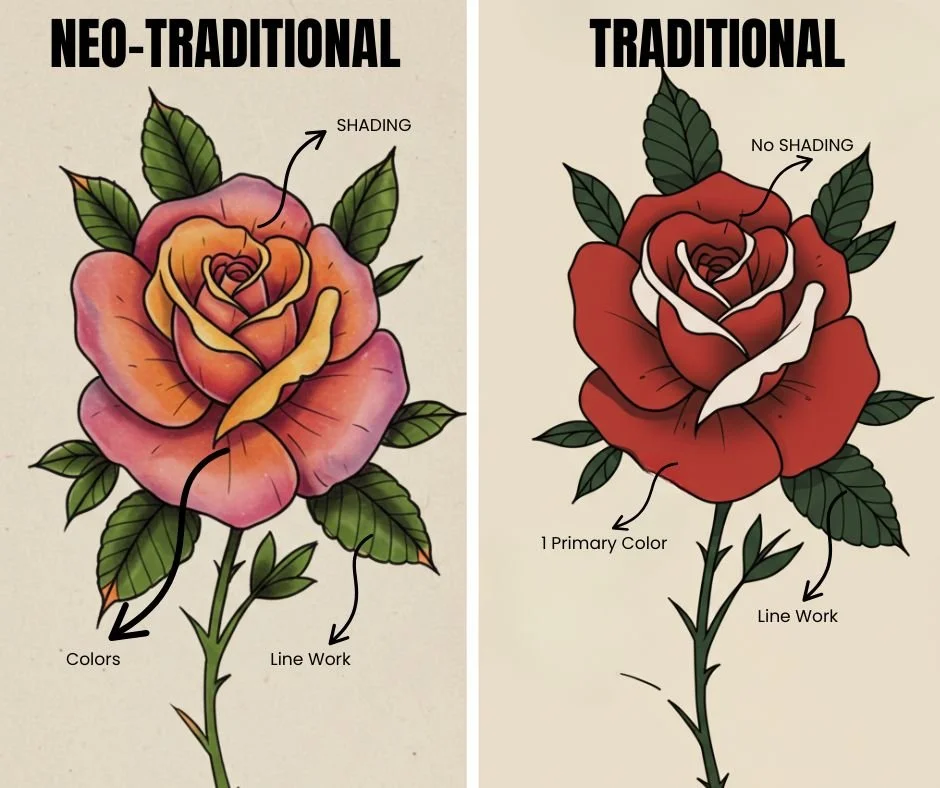

Traditional vs Neo-Traditional Tattoos: What is the Difference? (Part 1)
The tattoo industry encompasses numerous artistic styles, but few have maintained as much prominence and influence as traditional and neo-traditional tattoos. Understanding the distinctions between these two popular tattoo styles is essential for anyone considering their next piece of body art or simply appreciating the evolution of tattoo artistry.
The Foundation: American Traditional Tattoos
American traditional tattoos, also known as Old School tattoos, represent the cornerstone of Western tattoo culture. This iconic tattoo style emerged in the early 20th century and established many of the fundamental principles that continue to influence tattoo artists today.

Defining Characteristics of Traditional Tattoos
Traditional tattoos are immediately recognizable due to their distinctive visual elements. These designs feature bold, thick black outlines that create strong definition and ensure the tattoo remains legible over time. The color palette is deliberately limited, typically incorporating red, green, yellow, blue, and black. This restriction wasn't arbitrary—these colors were chosen for their stability and longevity in skin.
The imagery in American traditional tattoos draws from maritime culture, military symbolism, and Americana. Common motifs include anchors, roses, eagles, ships, daggers, hearts, and pin-up girls. These designs are intentionally two-dimensional, featuring solid color fills with minimal shading or gradient work. The simplicity serves both aesthetic and practical purposes, ensuring the tattoo ages gracefully and maintains its visual impact.
Historical Context and Cultural Significance
The roots of American traditional tattooing trace back to sailors, soldiers, and working-class individuals who sought permanent reminders of their experiences and beliefs. Tattoo parlors in port cities became cultural hubs where stories were shared and artistic traditions were passed down through apprenticeships. This style became synonymous with rebellion, adventure, and a certain rugged individualism that defined much of early 20th-century American culture.
The Evolution: Neo-Traditional Tattoos
Neo-traditional tattoos emerged in the late 20th century as artists began pushing the boundaries of traditional tattooing while maintaining respect for its foundational principles. This tattoo style represents a modern interpretation that expands upon classical techniques and imagery.
Neo-Traditional Characteristics and Innovation
While neo-traditional tattoos retain the bold black outlines characteristic of their predecessors, they incorporate significantly more complexity in design and execution. The color palette expands dramatically, embracing vibrant purples, oranges, teals, and countless other hues that weren't traditionally available or stable in earlier tattooing eras.
Neo-traditional designs often feature more realistic proportions and three-dimensional elements. Artists employ sophisticated shading techniques, creating depth and dimension that transforms flat imagery into more lifelike representations. The subject matter also broadens considerably, incorporating elements from nature, fantasy, pop culture, and fine art while maintaining the strong compositional structure of traditional work.
Key Differences at a Glance
Traditional vs Neo-Traditional Tattoo Characteristics Comparison
| Characteristic | Traditional (Old School) | Neo-Traditional |
|---|---|---|
| Outline Thickness | Bold, heavy black outlines (typically 3-5mm) | Varied line weights, from thin to bold |
| Color Palette | Limited to red, green, yellow, blue, and black | Expanded palette including pastels, gradients, and realistic skin tones |
| Shading Technique | Minimal shading, mostly solid color fills | Complex shading with gradients, highlights, and dimensional effects |
| Subject Matter | Classic imagery: anchors, roses, eagles, pin-ups, ships | Diverse themes: nature, fantasy, pop culture, fine art, realistic portraits |
| Design Complexity | Simple, bold designs with clear readability | Intricate details with layered compositions and realistic elements |
| Historical Period | Early 1900s-1950s American tattoo culture | 1980s-present, evolved from traditional foundations |
| Aging Properties | Ages well due to bold lines and solid colors | May require touch-ups due to fine details and complex shading |
| Artist Skill Level | Foundational technique, emphasis on clean execution | Advanced technique requiring fine art background and color theory |
The fundamental difference between these tattoo styles lies in their approach to artistic expression. Traditional tattoos prioritize simplicity, boldness, and time-tested imagery that has proven its staying power both culturally and technically. Neo-traditional tattoos embrace innovation while respecting tradition, allowing for greater artistic freedom and contemporary relevance.
Both styles require skilled artists who understand not only the technical aspects of tattooing but also the cultural significance and artistic principles that define each approach. The choice between traditional and neo-traditional often comes down to personal preference, lifestyle considerations, and the specific message or aesthetic the client wishes to convey.
Traditional vs Neo-Traditional Tattoos: Style Knowledge Quiz
Think you know the difference between traditional and neo-traditional tattoo styles? This quiz will test your understanding of the key characteristics, historical context, and design principles that define these two popular tattoo approaches. From color palettes to line work techniques, see how well you can distinguish between these classic and contemporary styles.
Understanding these distinctions helps ensure that your tattoo choice aligns with your personal style and long-term satisfaction. Whether drawn to the timeless appeal of American traditional or the artistic innovation of neo-traditional work, both styles offer rich traditions and endless possibilities for meaningful body art.
Neo-Traditional Tattoos: Modern Evolution of Classic Art
Neo-traditional tattoos represent the contemporary evolution of American traditional tattooing, emerging in the late 20th century as artists sought to expand upon classic foundations while maintaining recognizable elements. This tattoo style preserves the bold outlines characteristic of traditional work but incorporates significantly more artistic freedom and technical complexity.
The defining features of neo-traditional tattoos include expanded color palettes that go far beyond the limited traditional spectrum, incorporating pastels, earth tones, and vibrant hues previously unseen in classic American traditional work. Artists working in this style employ sophisticated shading techniques, dimensional elements, and intricate details that create depth and realism while still honoring the bold, readable aesthetic of their predecessors.
Key Differences Between Traditional and Neo-Traditional Styles
Understanding the distinctions between these tattoo styles helps clients make informed decisions about their ink. While both styles share common roots, their execution and aesthetic outcomes differ significantly across multiple dimensions.
Traditional vs Neo-Traditional Tattoo Characteristics Comparison
| Characteristic | Traditional (Old School) | Neo-Traditional |
|---|---|---|
| Outline Thickness | Bold, heavy black outlines (typically 3-5mm) | Varied line weights, from thin to bold |
| Color Palette | Limited to red, green, yellow, blue, and black | Expanded palette including pastels, gradients, and realistic skin tones |
| Shading Technique | Minimal shading, mostly solid color fills | Complex shading with gradients, highlights, and dimensional effects |
| Subject Matter | Classic imagery: anchors, roses, eagles, pin-ups, ships | Diverse themes: nature, fantasy, pop culture, fine art, realistic portraits |
| Design Complexity | Simple, bold designs with clear readability | Intricate details with layered compositions and realistic elements |
| Historical Period | Early 1900s-1950s American tattoo culture | 1980s-present, evolved from traditional foundations |
| Aging Properties | Ages well due to bold lines and solid colors | May require touch-ups due to fine details and complex shading |
| Artist Skill Level | Foundational technique, emphasis on clean execution | Advanced technique requiring fine art background and color theory |
Traditional tattoos prioritize longevity and clarity over time, utilizing techniques proven to maintain their appearance for decades. The bold black outlines and solid color fills resist fading and blurring better than more delicate work. Neo-traditional pieces, while incorporating more complex elements, still maintain enough boldness to age well when executed by skilled artists who understand proper line weight and color saturation principles.
Subject Matter and Artistic Themes
Traditional American tattoo imagery draws from maritime culture, military symbolism, and Americana, featuring anchors, ships, eagles, pin-up girls, and classic roses. These designs carry historical significance and cultural meaning that extends beyond mere decoration. Neo-traditional artists expand this iconography to include contemporary subjects, pop culture references, nature scenes with enhanced realism, and personal symbolism while maintaining the bold, graphic quality that makes tattoos readable.
The artistic approach in neo-traditional work allows for more narrative complexity and emotional depth. Artists can incorporate realistic portraiture, detailed botanical elements, and intricate backgrounds while preserving the strong silhouettes and bold contrast that ensure the tattoo remains visually striking from a distance.
Technical Considerations and Artist Expertise
Choosing between traditional and neo-traditional styles often depends on the specific artist's expertise and the client's aesthetic preferences. Traditional tattoos require mastery of fundamental techniques including proper line work, color theory within limited palettes, and understanding of how simple designs age over time. Neo-traditional work demands additional skills in realistic rendering, color blending, and compositional complexity.
Both styles benefit from artists who understand skin as a canvas and how different techniques interact with the body's natural aging process. Proper consultation with experienced artists helps ensure the chosen style aligns with the client's lifestyle, skin type, and long-term vision for their tattoo collection.
Traditional vs Neo-Traditional Tattoos: Style Knowledge Quiz
Think you know the difference between traditional and neo-traditional tattoo styles? This quiz will test your understanding of the key characteristics, historical context, and design principles that define these two popular tattoo approaches. From color palettes to line work techniques, see how well you can distinguish between these classic and contemporary styles.
Making Your Style Choice
The decision between traditional and neo-traditional tattoos ultimately reflects personal aesthetic preferences, lifestyle considerations, and the specific meaning or symbolism desired in the artwork. Traditional tattoos offer timeless appeal and proven longevity, making them excellent choices for first tattoos or those seeking classic Americana imagery. Neo-traditional work provides more artistic flexibility and contemporary relevance while maintaining the bold, graphic qualities that make tattoos effective body art.
When selecting a tattoo artist, review portfolios specifically showcasing the desired style, as specialization often produces superior results. Both traditional and neo-traditional tattoos require significant skill and artistic understanding, but the specific techniques and aesthetic sensibilities differ enough that artist selection becomes crucial for optimal outcomes.
Regardless of style choice, prioritize artists who demonstrate consistent line work, proper color saturation, and understanding of how their chosen style ages over time. Quality execution in either traditional or neo-traditional approaches results in tattoos that maintain their visual impact and personal significance for decades to come.
No comments yet. Be the first to share your thoughts!