Beyond the flash sheet
For decades, getting a tattoo meant flipping through a book of pre-drawn flash, or describing a vision to an artist and hoping for the best. That process is still common, and many talented artists work entirely that way. But the world of tattoo designs is changing, and it's happening faster than many people realize. Digital tools have been creeping into the industry for a while – Procreate is practically standard now for sketching – but artificial intelligence is taking things a step further, and it’s already affecting how many people begin their ink journey.
This isn't about robots wielding needles. The shift is happening in the early stages: brainstorming and mood boarding. Clients use generators to build visual references, and shops use them to refine those ideas before the stencil ever touches skin. It is a collaborative tool, not a replacement for the person holding the machine.
We’re seeing a shift from a primarily reactive process – an artist interpreting a client’s description – to a more iterative one. Clients can now show the artist what they envision, even if they can't articulate it perfectly. This leads to fewer miscommunications and a higher chance of ending up with a tattoo you truly love. Ultimately, the goal isn’t to eliminate the human element, but to make the design process smoother and more effective for everyone involved.
Current AI design tools
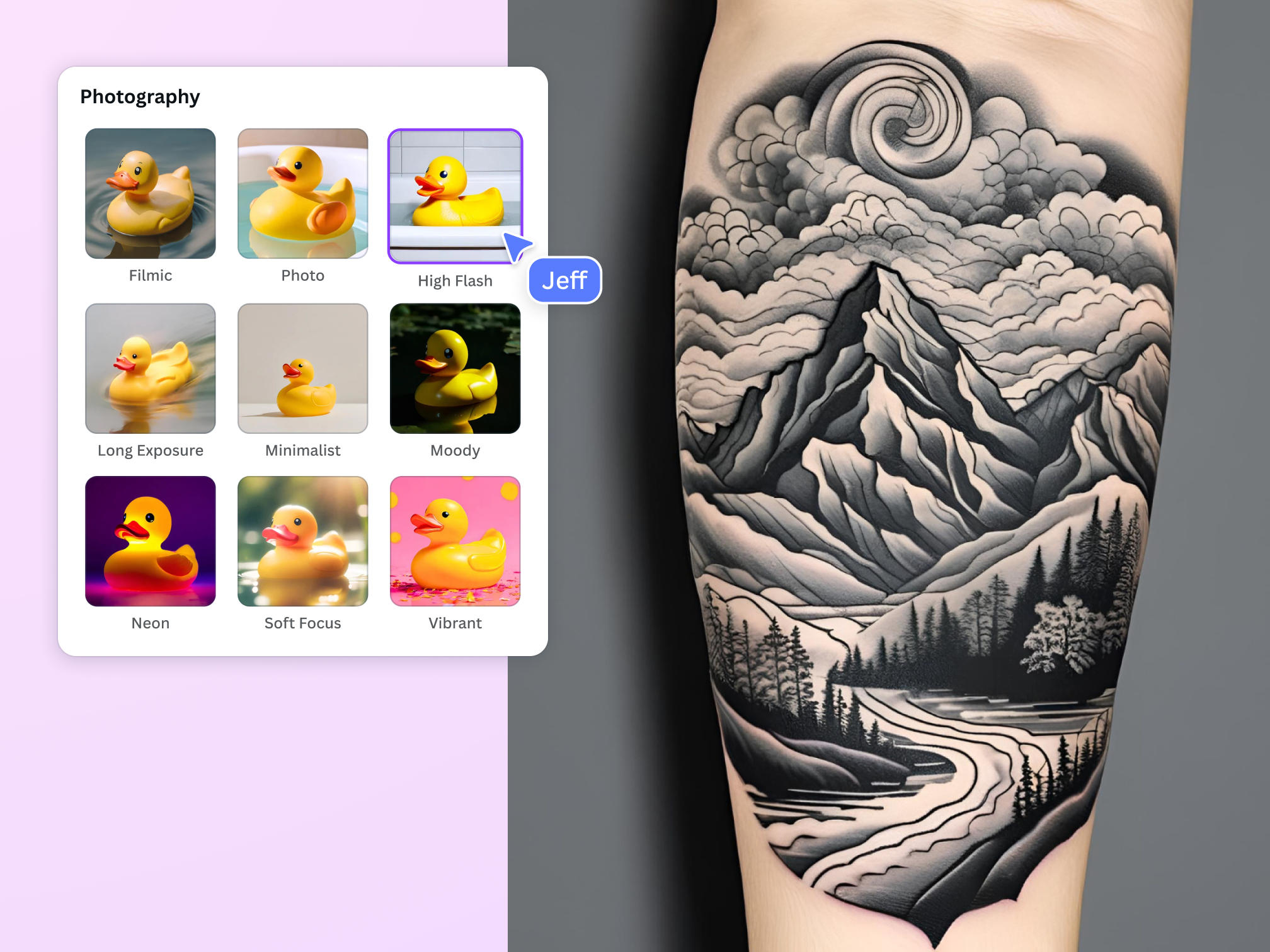
Several types of AI tools are emerging to assist tattoo artists. Many operate on the principle of text-to-image generation, where a detailed prompt yields a visual result. Platforms like Midjourney and DALL-E 2 are popular starting points, allowing clients and artists to quickly visualize concepts. These tools aren't specifically for tattoos, but they’re incredibly versatile and can be adapted to create unique designs. The results often require refinement, but they provide a solid foundation.
Beyond image generation, AI is also being used for style transfer. This allows an artist to take a client's sketch or a reference image and apply a specific artistic style to it – perhaps transforming a photograph into a neo-traditional tattoo design. There are also tools focused on image refinement, enhancing resolution, removing imperfections, and generally preparing artwork for tattooing. These aren’t always standalone applications; some are integrated into existing design software.
These are just tools. They can't create art independently. You still need an artist to fix the weird AI artifacts and make sure the design actually works as a tattoo. An artist understands how ink spreads over ten years; an algorithm doesn't. The AI handles the initial grunt work, but the human makes the final call on composition and linework.
I'm not aware of any widely adopted, industry-standard AI SDKs specifically for tattoo design yet. Most shops are utilizing general-purpose AI platforms and adapting them to their needs. This is a rapidly evolving field, though, and we can expect to see more specialized tools emerge in the coming years.
Personalized consultations
AI is elevating tattoo consultations beyond simply discussing ideas. Imagine a system that analyzes a client’s body shape and suggests designs that will best complement their anatomy. Or one that considers skin tone to ensure the colors will pop and age gracefully. These aren't far-fetched concepts; they’re becoming increasingly feasible with advancements in computer vision and machine learning.
Some shops are even experimenting with AI-powered questionnaires that delve into a client’s personality and preferences. This goes beyond just asking about favorite styles; it explores their values, interests, and even their emotional connection to the design. The AI can then suggest designs that resonate with the client on a deeper level, creating a truly personalized experience.
Data privacy is a legitimate concern here, and responsible shops will be transparent about how they’re collecting and using client information. Look for shops that prioritize data security and offer clients control over their data. It's a good sign if a shop clearly explains its AI usage policies and obtains informed consent from clients. The value proposition is clear: a more tailored design process resulting in a tattoo you'll cherish for a lifetime.
Emerging style trends
Based on current trends observed on platforms like Tattoodo and Pinterest, AI appears to be influencing several emerging tattoo styles. We’re seeing a rise in intricate geometric designs, often incorporating complex patterns and symmetrical arrangements. AI’s ability to generate precise and detailed artwork makes these designs more accessible and customizable.
There's also a growing demand for hyper-realistic shading techniques, and AI tools are proving invaluable in achieving subtle gradients and lifelike textures. These tools allow artists to experiment with different shading approaches and refine their work with greater precision. Pinterest searches for 'watercolor tattoos' and 'realistic animal tattoos' are consistently high, suggesting a continued interest in these styles.
AI is also enabling more intricate and customized designs that would have been difficult or time-consuming to create manually. Clients are using AI to generate unique floral arrangements, abstract patterns, and personalized motifs, pushing the boundaries of traditional tattoo art. The ability to quickly iterate on designs and explore different variations is a major benefit.
Why artists aren't worried
The biggest concern surrounding AI in tattooing is, understandably, job security. However, most artists who are experimenting with these tools view them as collaborators, not replacements. They see AI as a way to streamline tedious tasks, such as creating initial sketches or refining complex designs, freeing up their time to focus on the artistic aspects of the process.
I spoke with Sarah Miller, a tattoo artist in Portland, Oregon, who uses AI to generate mood boards for her clients. “It’s a huge time saver,” she explained. “Clients often struggle to articulate what they want, and AI helps us quickly visualize different concepts and refine the design based on their feedback. It’s a starting point, not the finished product.”
The consensus among artists is that AI excels at generating ideas and exploring variations, but it lacks the artistic sensibility and technical skill to create a truly exceptional tattoo. The artist’s role remains crucial in ensuring the design is aesthetically pleasing, technically sound, and tailored to the client’s individual needs. It's about leveraging technology to enhance creativity, not replace it.
No comments yet. Be the first to share your thoughts!